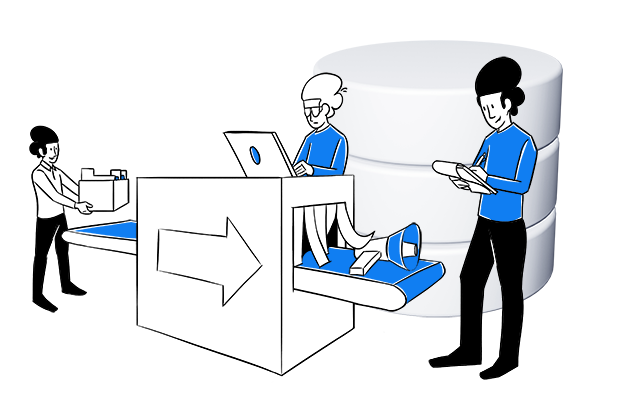
Data silos refer to isolated repositories of data that are controlled by specific departments within an organization, making that data inaccessible to other parts of the organization. They typically contain inconsistent, redundant data located in systems that do not integrate well with one another.
Data silos can lead to various challenges:
- Incomplete view of business operations: Executives may struggle to obtain a holistic view of organizational performance, negatively impacting their strategic decisions.
- Reduced collaboration: Teams working in isolation are less likely to share insights or work together on projects, which can stifle effective cooperation and efficiency.
- Increased costs: Maintaining separate systems for each department can lead to higher IT costs and resource inefficiencies.
- Data quality issues: Inconsistent and duplicated data can undermine the integrity of business intelligence efforts and analytics applications.
Solutions to breaking down data silos include:
- Centralized data management: Implementing solutions like data warehouses, data lakes, or customer data platforms (CDPs) can help consolidate disparate data sources into a unified repository for easier access and analysis.
- Change management initiatives: Promoting a culture of collaboration and transparency can encourage departments to share their data more freely, improving overall organizational effectiveness.
- Integration strategies: Utilizing techniques such as Extract, Transform, Load (ETL) processes can help integrate siloed data into unified systems for better accessibility and consistency.
The modern data stack is another way to address the challenges of data silos. It offers an integrated, scalable architecture to ingest, store, prepare, analyze, and visualize data.
Learn more: