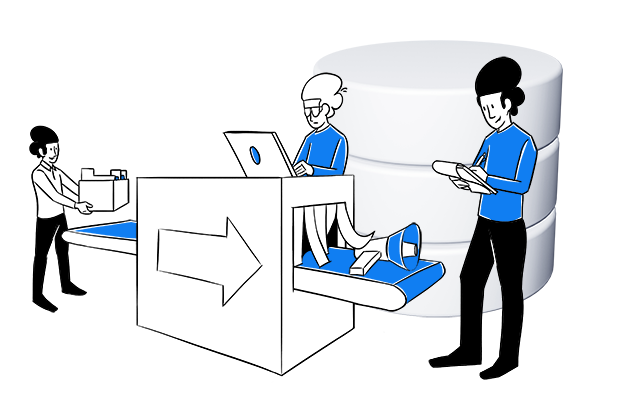
In analytics, server-side and client-side tracking are methods used to send data collected from a browser to an analytics platform.
In client-side tracking, data is sent directly to the analytics service. This method is popular because it’s well-documented and easy to set up without advanced technical skills. However, the data gathered with this method becomes more and more unreliable.
Server-side tracking offers more control over data collection and processing as well as better quality of data. In this method, data collection happens outside the browser, with communication occurring directly between the website server and the analytics platform.
A hybrid method of server-side tracking, also known as a first-party collector, combines the ease of client-side data collection with the control and security of server-side tracking. Although hybrid tracking might slightly compromise data accuracy because it still partly relies on the browser, it’s more convenient to use than a purely client-side approach.
It’s important to underline that companies using server-side tracking to gather personal data must clearly explain their tracking methods in their privacy policies. They also have to get visitor consent to collect personal data, just like they would with client-side trackers.
Learn more about server-side tracking: