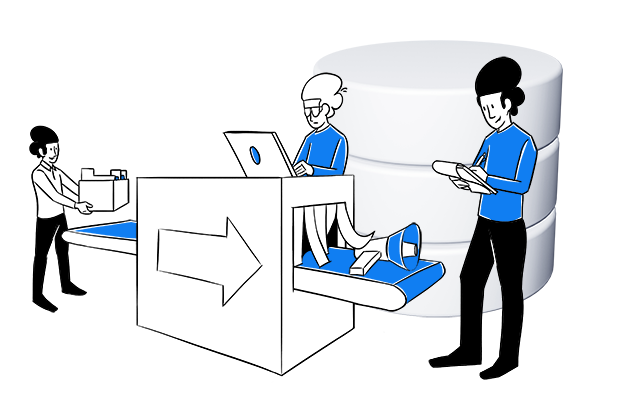
Conversion attribution in marketing is a process of finding which channel led the user to perform a desired action (a Conversion ) on a website or in an app. It allows marketers and analysts to correctly assign value to a particular event, research how different touchpoints and channels impact each individual desired action.
There are several conversion attribution models:
- Last-click
- First-click
- Position-based
- Last-non-direct-click
- Time-decay
- Linear
- Custom
It’s also possible to use custom models. They come in handy in case the standard ones won’t meet your specific business needs. These models allow you to adjust baseline models to fit how you approach attribution for different campaigns, channels and projects.
To measure conversion it’s useful to use model comparison tool. It’s a report that improves your conversion analysis by comparing different attribution models.
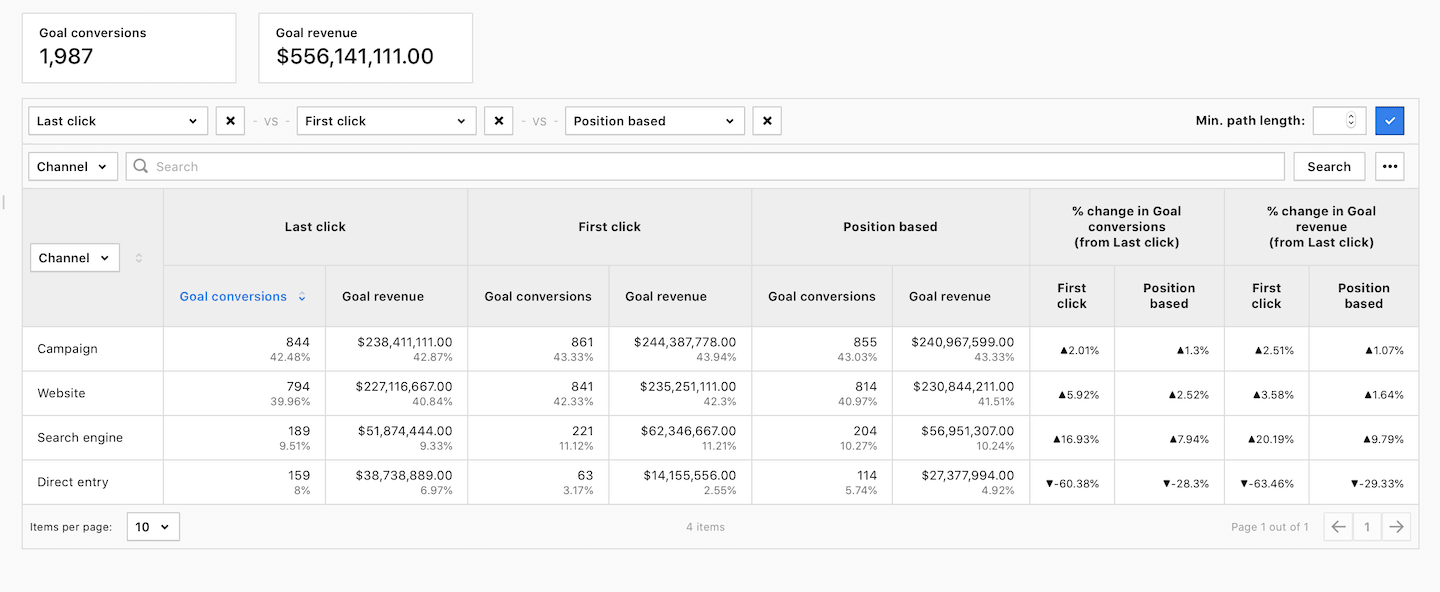
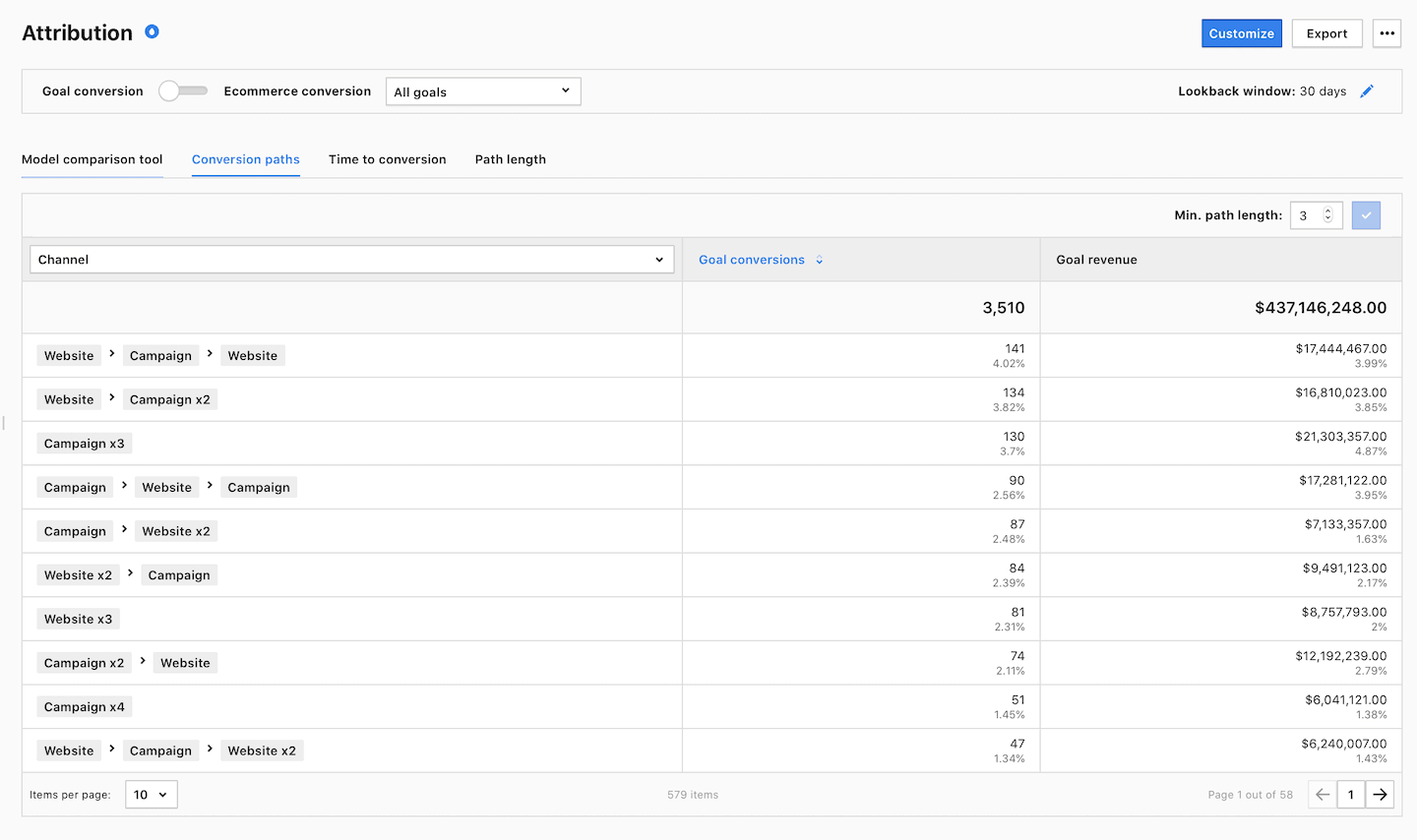
But you can also improve your analysis with an attribution report. This report makes it possible to analyze conversions and sources of conversions on your website. It lets you to better understand the user’s paths that led them to the conversion.
Find more information about the conversion attribution on the Piwik PRO blog: